The rotation trade that analysts had been mapping since February 27 arrived on Wednesday April 8, 2026 — and it arrived all at once. US President Donald Trump announced a two-week conditional ceasefire with Iran on Tuesday April 7, approximately 90 minutes before his own threatened deadline for airstrikes on Iranian power infrastructure. Iran's Supreme National Security Council confirmed acceptance. The Strait of Hormuz, closed since February 28, is set to reopen to commercial shipping during the pause.
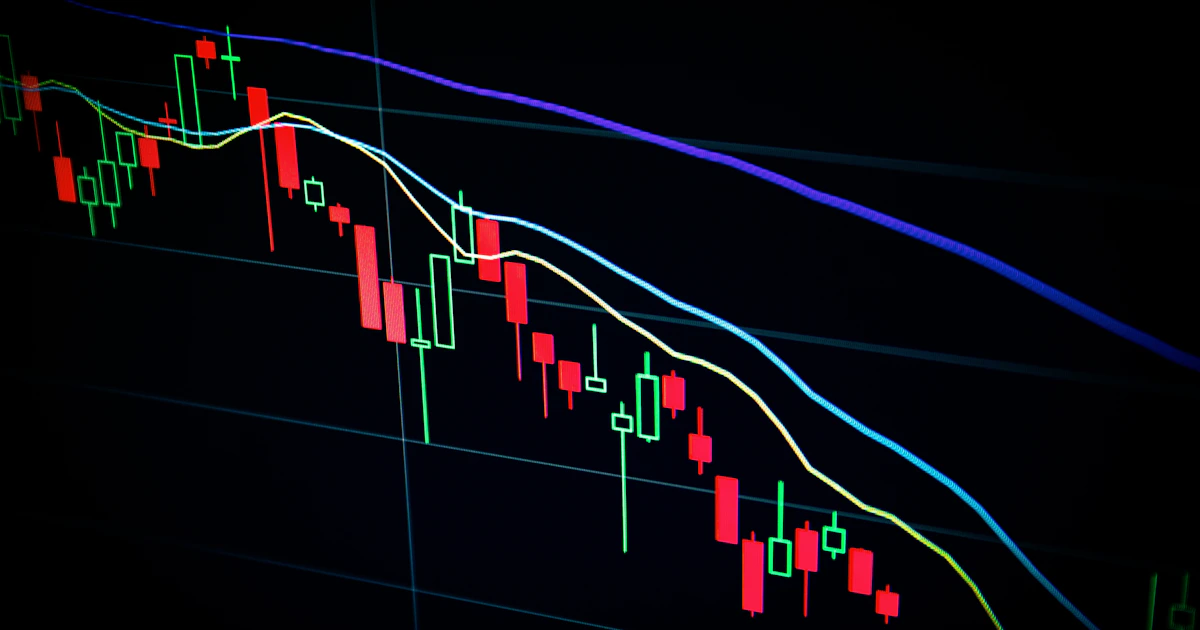
The market response was immediate and structurally precise. Brent crude plunged more than 15% in the session, falling below $95 per barrel — a four-week low, per Morningstar. Global equity markets surged. And the country ETF universe executed the exact rotation that the energy trade balance framework had predicted: every market that absorbed the oil shock is recovering sharply, and every market that benefited from it is stalling.
According to Country ETF Tracker data as of April 8, the iShares MSCI South Korea ETF (EWY) — the worst-performing country ETF of March at -18.74% — is leading the universe this week at +8.71%. The iShares MSCI Norway ETF (ENOR) — the best-performing ETF of the entire war period at +28.39% YTD — is the laggard this week at +0.59%. The iShares MSCI Saudi Arabia ETF (KSA) is flat at -0.03%, the only country ETF in the universe with a negative weekly return.
The war trade is unwinding. The correlation of 0.585 between energy trade balance and ETF performance — which defined the entire war period — is reversing in real time.
What Happened: The Ceasefire Announcemen
t
The deal arrived through a channel few analysts had anticipated. Reuters reported that the ceasefire was brokered by Pakistan Prime Minister Shehbaz Sharif following accelerated diplomatic engagement over the prior 48 hours. Trump announced the agreement approximately 90 minutes before his self-imposed deadline for strikes on Iranian power plants — a deadline that had sent Brent above $107 in the prior session.
Per NPR: "The US and Israel would suspend bombing Iran for two weeks if Iran follows through on its commitment to reopen the Strait of Hormuz." Per NBC: "Iran's Supreme National Security Council says it has accepted the two-week ceasefire." The Washington Post noted that sporadic attacks were reported in Iran and Gulf Arab nations within hours of the announcement — a reminder that a two-week pause is not a peace agreement.
Prediction markets on Polymarket now price the US-Iran ceasefire by April 7 at 99.55% Yes — the market has essentially resolved. The ceasefire by April 30 market closed at 100% Yes. However, Hormuz normalisation by April 30 remains at only 32% Yes — reflecting the market's assessment that two weeks of ceasefire does not guarantee a permanent shipping resumption, per Polymarket data as of April 8, available at countryetftracker.com/polymarket-macro-situation-room.
CNBC described it as "a fragile US-Iran ceasefire that sparks market relief — but no clear path to lasting peace." Business Insider deployed the now-viral framing: "TACO time" — Trump Always Chickens Out — noting the deal came 90 minutes before his deadline. Barron's asked the more analytically relevant question: "Why aren't Brent crude and WTI falling more on Trump's ceasefire deal?" — flagging the fragility discount the oil market is applying to a two-week pause versus a permanent resolution.
Today's Country ETF Scoreboard: April
8
All figures represent performance from April 1 closing prices to April 8 intraday prices as of market close. Data sourced from CountryETFTracker.com.
Top performers — the war's biggest losers bouncing hardest:
| Country | ETF | Week Return | War Period (Feb 27→Mar 31) | The Reversal |
|---|---|---|---|---|
| 🇰🇷 South Korea | EWY | +8.71% | -18.74% | Biggest loser → biggest winner |
| 🇬🇷 Greece | GREK | +7.79% | -9.63% | Energy importer recovery |
| 🇿🇦 South Africa | EZA | +5.86% | -16.91% | 2nd worst loser → top 3 |
| 🇵🇱 Poland | EPOL | +5.46% | -8.81% | European importer bounce |
| 🇮🇪 Ireland | EIRL | +5.26% | -10.53% | European importer bounce |
| 🇳🇿 New Zealand | ENZL | +5.25% | -8.44% | Rate-sensitive recovery |
| 🇹🇼 Taiwan | EWT | +5.81% | -6.28% | Semiconductor + energy relief |
| 🇮🇳 India | INDA | +5.56% | -10.39% | Heavy importer recovery |
| 🇻🇳 Vietnam | VNM | +5.14% | -9.28% | Net importer recovery |
| 🇹🇷 Turkey | TUR | +4.86% | -6.87% | EM importer bounce |
| 🇯🇵 Japan | EWJ | +3.21% | -8.59% | Near-100% importer relief |
| 🇺🇸 S&P 500 | SPY | +2.70% | -5.20% | Multiple re-expansion begins |
Bottom performers — the war's biggest winners stalling:
| Country | ETF | Week Return | War Period (Feb 27→Mar 31) | The Reversal |
|---|---|---|---|---|
| 🇸🇦 Saudi Arabia | KSA | -0.03% | +6.94% | Only negative ETF this week |
| 🇳🇴 Norway | ENOR | +0.59% | +7.23% | War leader now the laggard |
| 🇧🇷 Brazil | EWZ | +2.68% | -0.88% | Commodity basket mixed |
The symmetry is near-perfect. The top eight performers this week are all drawn from the universe of energy importers that were crushed during the war. The two laggards are the only two country ETFs that were positive during the war. KSA is the only ETF in the universe with a negative weekly return. ENOR is second to last.
Performance Comparison: EWY vs ENOR vs KSA vs EZA vs SPY

Country ETF Tracker
- EWY
- ENOR
- KSA
- EZA
- SPY
Trade iShares MSCI South Korea ETF EWY on eToro – the easy-to-use investing app with 7000+ assets.
Your capital is at risk.
Other fees apply.
The Inversion: Reading the Dat
a
The rotation is mathematically consistent with the war-period trade unwinding. During the war, the correlation between energy trade balance and country ETF returns was 0.585 — energy exporters outperformed, importers underperformed, with extraordinary precision. The ceasefire announcement has inverted that correlation in a single session.
EWY at +8.71% is the most analytically significant data point of the day. Investing.com reported that "Asia stocks surge as Trump touts end to Iran war — South Korea outperforms with 8% jump." The iShares MSCI South Korea ETF's recovery is structural, not speculative: Samsung and SK Hynix, which together represent 43% of EWY's portfolio, have two independent tailwinds simultaneously — energy cost normalisation as Brent falls below $95, and the intact AI earnings thesis (Nvidia HBM4 contracts) that was never impaired, only suppressed by the oil shock.
EZA at +5.86% reflects the partial unwind of South Africa's triple shock. Precious metals are recovering alongside global risk appetite — gold, platinum and palladium all bounced sharply in the session as the safe-haven energy-scarcity trade unwound. The rand is strengthening against the USD, providing additional USD-denominated return amplification for EZA holders.
ENOR at +0.59% tells the story from the other side. The iShares MSCI Norway ETF's underperformance is not a failure — it is a mathematically correct response. Norway's pipeline gas still supplies 25% of Europe's demand regardless of Hormuz status. The structural gas revenue does not disappear with a ceasefire. But the oil price premium that drove ENOR's +7.23% during the war is now partially unwinding as Brent falls toward $95. The fund is not losing; it is simply not the marginal winner today.
KSA at -0.03% is the sharpest signal in the data. Saudi Arabia was a direct war beneficiary — higher oil prices, partial Petroline bypass — and it is now the only negative country ETF in the universe as Brent drops more than 15%. The conflict-zone risk premium that had been partially offsetting KSA's oil gains is now reversing, but so is the oil price uplift that justified the premium in the first place.
Is the War Trade Over
?
The honest answer is: partially, and conditionally.
What has definitively resolved: The probability of a US-Iran ceasefire by April 7 closed at 99.55% Yes on Polymarket. The ceasefire by April 30 is 100% Yes. The acute escalation risk — Trump's power plant deadline — has passed. The immediate oil shock premium is unwinding.
What remains uncertain: Hormuz normalisation by April 30 is only 32% Yes on Polymarket — up from 24% before the deal but far from certain. The Washington Post reported attacks in Iran and Gulf Arab nations within hours of the ceasefire announcement. CNBC noted "no clear path to lasting peace." Barron's pointed out that Brent crude, despite falling sharply, has not returned to pre-war levels — the market is pricing a fragility discount on a two-week pause.
The US recession probability on Polymarket has fallen from 36% to 30.5% — a meaningful improvement that reflects the removal of the most acute stagflation scenario. The Fed April meeting is priced at 98.45% no change — the rate hike fear that drove SPY's -5.20% during the war has essentially been priced out for the near term.
The critical variable for the next two weeks is whether the Hormuz reopening is sustained or reverses. A permanent Hormuz normalisation would trigger full recovery in energy importers and full unwind of energy exporter premiums. A ceasefire collapse would reverse today's moves with similar velocity. Prediction markets are currently pricing approximately one-third probability of the positive scenario and two-thirds probability of continued disruption through April 30.
What This Means for Country ETF Positionin
g
The ceasefire announcement has changed the regime, but it has not ended the analytical framework. The energy trade balance variable remains relevant — it now determines the magnitude of recovery, not the direction of impairment.
EWY at 10.29x forward P/E entering today's session was pricing prolonged structural energy impairment. The +8.71% move partially compresses that discount, but at 10.29x the fund remains deeply cheap relative to the MSCI ACWI at 18.83x. If Hormuz normalises permanently, EWY has significant further upside from valuation mean-reversion alone — independent of the AI earnings catalyst that was always intact.
ENOR at 14.33x forward P/E still trades at a 24% discount to the MSCI ACWI. The fund does not collapse in a ceasefire scenario because Norway's gas pipeline supply to Europe is structural and permanent — it does not depend on Hormuz status. The war premium unwinds; the gas supply premium does not.
SPY at +2.70% this week reflects the multiple re-expansion trade. At 21.73x forward P/E, SPY is sensitive to rate expectations. With the Fed hike probability now at minimal levels and the oil-driven inflation shock partially reversing as Brent falls toward $95, the discount rate applied to SPY's earnings stream is compressing — the arithmetic works in the other direction from March.
Track live ceasefire probabilities, Hormuz normalisation odds and the full country ETF performance table from February 27 at countryetftracker.com/Iran-war-market-screener-strait-of-hormuz-crisis.
Frequently Asked Question
s
What happened to country ETFs after the Iran ceasefire announcement?
Trump announced a two-week conditional ceasefire with Iran on April 7, 2026. The immediate market response on April 8: energy-importing country ETFs surged — EWY +8.71%, GREK +7.79%, EZA +5.86%, EWT +5.81%, INDA +5.56%. Energy-exporting ETFs that had led during the war stalled — KSA -0.03% (the only negative ETF in the universe), ENOR +0.59% (the laggard). Oil fell more than 15%, with Brent dropping below $95.
Why is South Korea (EWY) leading the ceasefire rally?
South Korea imports approximately 98% of its energy requirements. A 15% drop in Brent oil directly reduces the primary cost shock that drove EWY's -18.74% decline in March — the worst monthly reading since October 2008. Samsung and SK Hynix's AI earnings thesis was never impaired; the energy import shock was the sole driver of March's decline. As that shock partially reverses, EWY recovers sharply. At 10.29x forward P/E, the valuation starting point also provides maximum upside leverage to a regime change.
Why is Norway (ENOR) underperforming this week despite the ceasefire?
ENOR is underperforming because the ceasefire removes the oil price premium that drove its war-period gains. When Brent falls 15%, Equinor's upstream revenue per barrel falls proportionally. Norway's pipeline gas supply to Europe is structural and unaffected by Hormuz — providing a floor — but the war premium that drove ENOR from $28.78 at year-start to $36.71 today is partially unwinding. ENOR is not crashing; it is simply the fund with the least to gain from a ceasefire and the most to lose from the oil price drop.
Is the ceasefire permanent?
The ceasefire is explicitly two weeks, conditional on Iran following through on commitments to reopen Hormuz to commercial shipping. Prediction markets price Hormuz normalisation by April 30 at only 32% — reflecting the market's view that a two-week pause is fragile. The Washington Post reported attacks in Iran and Gulf Arab nations within hours of the announcement. A ceasefire collapse would reverse today's moves with similar velocity.